


NC Utilities Commission order delaying low-cost solar is ‘insult to injury’ as customer bills soar and Duke Energy rate hikes loom
RALEIGH, N.C. — On April 23, the North Carolina Utilities Commission issued an order delaying the 2026 solar and solar-plus-storage procurement process until after they issue an order on the 2026 Carbon Plan/Integrated Resources Plan, which should occur by end of year.
“More than ever, North Carolina households need cheap power, and competitively procured utility-scale solar is the cheapest and fastest way to bring new electricity online,” said Will Scott, North Carolina Policy Director at Environmental Defense Fund. “Delaying new solar procurements will only hurt households and the businesses that rely on North Carolina’s pro-business environment when making investments in the state.”
Analysis of Duke Energy filings shows that over the last four years, competitively procured clean energy has been 30% cheaper than energy from natural gas on average in North Carolina.
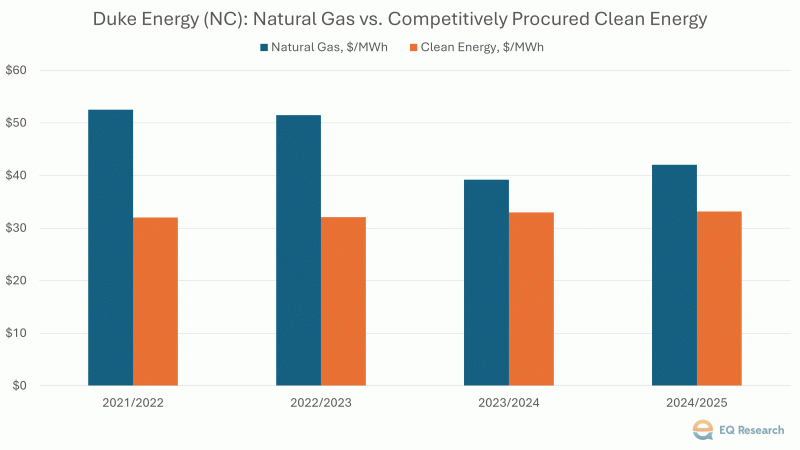
Reducing dependence on gas is critical for stabilizing bills, especially as the U.S. Energy Information Administration projects natural gas prices are on track to climb. Analysts project that prices in 2026 will average 16% higher than in 2025, primarily due to gas exports.
And Duke Energy’s continued reliance on natural gas is a big part of the problem. Analysis shows that natural gas price spikes are responsible for up to 67% of recent customer rate hikes. Yet Duke is doubling down on gas plants, tethering households to a fuel that is price-volatile, increasingly expensive and entirely outside customers’ control.
“We agree that Duke Energy cannot unilaterally decrease solar procurement targets ordered by the Commission,” Scott added. “But at a time of rising bills, North Carolina needs to maximize, not delay, affordable energy solutions like solar and batteries.”
With more than 3 million members, Environmental Defense Fund creates transformational solutions to the most serious environmental problems. To do so, EDF links science, economics, law, and innovative private-sector partnerships to turn solutions into action. edf.org
Related Expert

North Carolina Policy Director
Latest press releases
-
Colorado becomes first state to fully adopt the 2024 EPA methane standards
September 18, 2026 -
EDF analysis: repeal of power plant pollution standards will cause up to 84,000 early deaths, $3 trillion in damages
September 18, 2026 -
Virginia Governor Spanberger signs data center accountability framework
September 18, 2026 -
Congress votes on misguided measures attacking California’s long-guaranteed right to protect people from air pollution
September 17, 2026 -
EPA Sued Over Repeal of Power Plant Carbon Reduction Rules
September 17, 2026 -
Senate farm bill doesn’t meet the needs of today’s farmers
September 16, 2026