


Trump Administration Forces Washington’s Last Coal Plant to Stay Open Longer, Data Proves It’s Not Even Running
Data from the Energy Information Administration shows that the coal plant produced no electric power in the previous ‘emergency’ period DOE claimed it was needed.
(WASHINGTON – March 17, 2026) The Trump administration issued a second illegal emergency order mandating the TransAlta Centralia coal plant – Washington state’s last remaining coal plant – to operate for an additional 90 days past its original planned retirement date in December 2025.
New electricity generation data from the Energy Information Administration, analyzed by EDF, reveals that the Centralia plant hasn’t generated any meaningful electric power since January 2026, despite the Department of Energy claiming that the coal plant’s continued operation during this period was “essential for grid reliability.” Instead, the data finds that plentiful hydropower met 70% of total electricity demand from January to early March. These findings echo comments from the utility owner, who indicated that the plant hasn’t been running because it hasn’t been needed.
“The data proves that forcing this coal plant to stay open is just a wasteful charade,” said Ted Kelly, Director and Lead Counsel for U.S. Clean Energy at Environmental Defense Fund.
“The Centralia plant hasn’t been producing any power over this supposed ‘emergency’ period because the grid has more than enough electricity without it – yet families and businesses will bear the costs of keeping it operational.”
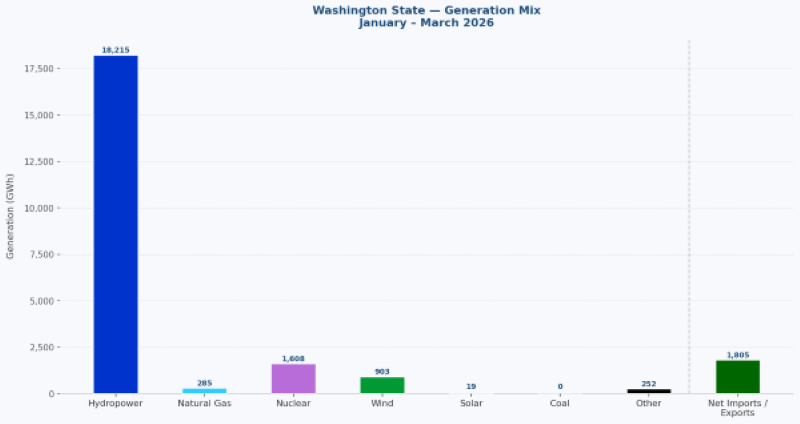
In Washington state, hydropower facilities produced more than 18,000 GWh from January – early March 2026, while the state’s only coal facility – the TransAlta Centralia plant – produced 0 GWh.
“While the Trump administration absurdly claims that forcing ancient, polluting coal plants to stay open past their expiration has been lifesaving, the irony is that the Centralia plant probably saved lives precisely because it hasn’t been running. Because that means it hasn’t been needlessly spewing more toxic pollution like mercury and arsenic into Washington communities,” continued Kelly.
Last Wednesday, Washington Governor Bob Ferguson signed a law that ensures any remaining coal generation must adhere to Washington’s cap-and-invest program and tax rules like other emitters, making it even more unlikely that the plant will produce power.
Even if the Centralia plant doesn’t actually run, the continued costs of keeping it operational and ready, per the Department of Energy’s mandates, will likely raise family and businesses’ electricity bills. Other coal plants, like the Campbell coal plant in Michigan, are experiencing extremely high costs to comply with similar DOE orders. The owner of Campbell plant has already filed to recover $42 million from ratepayers across the Midwest – and that’s just for its first 90 day order. The total net costs have ballooned to over $135 million, according to the utility’s latest financial filings.
Similar illegal emergency orders have been issued for old, unreliable coal plants in Indiana and Colorado as well.
EDF and public interest groups challenged the Centralia order and others in court.
For more information on electricity generation in Washington and the Northwest region, read EDF’s analysis.
With more than 3 million members, Environmental Defense Fund creates transformational solutions to the most serious environmental problems. To do so, EDF links science, economics, law, and innovative private-sector partnerships to turn solutions into action. edf.org
Related Expert

Director and Lead Counsel, U.S. Clean Energy
Latest press releases
-
Approved Exempted Fishing Permits Jeopardize South Atlantic Red Snapper
May 1, 2026 -
IMO Continues Work on Net-Zero Framework as Path to Global Action on Shipping Decarbonization
May 1, 2026 -
EPA Issues Guidance on Oil & Gas Methane Pollution Flaring Standards
May 1, 2026 -
Environmental Defense Fund Opposes Reported Proposals to Weaken New York’s Climate Law
May 1, 2026 -
Pennsylvania Regulators Move to Protect Customers from Data Center-Driven Grid Costs
May 1, 2026 -
Launch of new Western electricity market will curb costs, boost reliability and cut pollution as surging demand strains the grid
May 1, 2026